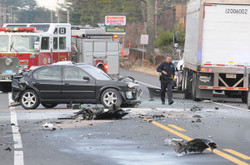
One of the more serious mistakes that drivers make, as far as insurance coverage is concerned, is not getting sufficient uninsured motorist or UM coverage for their vehicle. Getting a larger policy, such as $250k/$500k will only cost a few more hundred dollars a years, but it will provide an essential financial safety for several situation where you will need the money most: 1. Being involved in a serious accident, where the other driver is uninsured. If you have been hit by an uninsured driver, and you don’t have a UM coverage on your own policy, you are pretty much out luck as far getting compensated goes, except for your med-pay and health insurance policy that will provide for the medical expenses, and property damage coverage for your damaged vehicle, if you had that kind of coverage on your policy. You will not be compensated for your past and future wage loss if you are unable to work due to your injuries, and pain and suffering / emotional distress associated with the injuries suffered. When you have an uninsured motorist policy, you don’t need to worry about whether the other driver has valid insurance. You will have your own sufficient policy that will cover you for whatever amount you are insured for all your losses. 2. Hit and Run Accidents Some of the worst accidents are caused by hit-and-run drivers. People who cause serious accidents due to negligence or due to driving drunk or due to both have an incentive to try to escape liability and/or criminal charges by fleeing the scene and hoping that no one will ever find them. Many of these hit and run drivers are indeed never found and prosecuted. Your uninsured motorist coverage will also cover you in the hit and run situations. The above scenarios should make it clear to you that you must not save on your policy by not having sufficient uninsured motorist coverage, as the risks are way too high, while the potential savings are relatively insignificant.
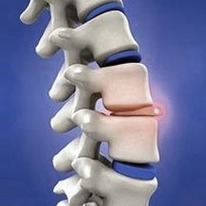
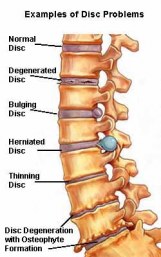
One of the common injuries in serious auto accidents, especially high-speed rear-end accidents is bulging disks in a spine. A bulging disk is a condition related to the spine, usually the lumbar, or lower back, that occurs when a disk bulges through a crevice in the spine. Disks are the soft, gelatinous material that cushions the vertebrae of the spine and allow it to flexibly bend and move. A bulging disk injury occurs when the disk shifts out of its normal place and most often occurs simply as a result of age and the amount of movement over a period of time as well normal wear and tear. A bulging disk is different from a herniated disk in that a bulging disk typically occurs gradually over time rather than suddenly.
In many cases, a bulging disk may be diagnosed as a condition secondary to another problem. Because a bulging disk does not always cause pain, it may only be found during a routine or diagnostic imaging test such as magnetic resonance imaging (MRI). The medical treatment for a bulging disk is relatively conservative in most cases. Rest and lifting restrictions are common, and a doctor may recommend a combination of heat and ice therapy and anti-inflammatory medications or cortisone injections to alleviate the symptoms. Back surgery, though not as common, can relieve severe pain caused by compression on the nerves from a bulging disk that becomes herniated. San Francisco is notorious for having many areas where the cars park perpendicular to the sidewalk and facing the sidewalk. This is especially common in the Marina, Pacific Heights and the Nob Hill districts, and creates unique dangers to pedestrians who walk behind the vehicles that pull out of such steep parking areas. This means that when the driver pulls out of such a parking area, he has to back up into usually a one-lane road, struggling to see through the cars parked next to him whether the road is free and clear from traffic. The accidents where the upcoming car runs into the vehicle that is pulling out from the perpendicular parking are quite common in San Francisco and often result in significant injuries to the driver of the parked vehicle, which is being impacted in the rear side, being pushed away. To make things worse for the driver of the parked car, the law in most cases imposes the greatest duty of care on the vehicle that is getting out of the parking area, which means that the driver who is pulling out of the parking area is almost always found at fault, because the upcoming cars have the right of way. The driver who pulls out of the parking area has to do everything in his power to make sure that he merges into the traffic safely and doesn't create any danger to the upcoming traffic. Thus, if you are completely unable to see the upcoming traffic through the cars that are parked next to yours, you are well advised to actually get out of the car and glance at the street and make sure that the road is clear or even ask the upcoming driver to stop for a moment and let you pull out from the parking area safely. One of the more noteworthy awards in a slip-and-fall case is the jury award of December 18, 2012, to Barbara Ferren. In that case, Ms. Ferren parked her car along the side of the Defendants' property to visit her daughter. When returning to her car and crossing the street, she tripped over a significantly raised sidewalk, which made her body propel forward. To avoid falling on her face, she extended her arms forward when landing on the ground. As a result, Plaintiff suffered humeral neck fracture. Ms. Ferren's lawyers argued that the sidewalk was raised by the tree root underneath it, and that the owners of the property had the duty to inspect and maintain the same property and repair, that they knew that it was dangerous condition but failed to repair it. The Defendants of course denied any liability. Two facts make this case particularly interesting. First, the Plaintiff in that case was claims adjuster herself. Thus, she knew how insurance companies operate when it comes to settling/fighting injury claims. Secondly, and somewhat unusually, despite the serious objective injury and the likely need for surgery confirmed by the plaintiff's doctor, the Defendants didn't offer any amount to settle the claim prior to trial. This goes to show that although insurance companies are quite experienced in evaluating claims and their potential exposure to liability, they can be completely off and out of touch with a jury's view of the case. Most brain injuries that doctors and lawyers see are classified as "mild." Mild traumatic brain injury (MTBI) accounts for more than 80 percent of closed head injuries. Moderate and severe brain injuries are among the most disabling conditions resulting from physical trauma, since the operations of the brain underlie all of our behaviors, emotions and experiences, and thus - any issues in the brain function can adversely affect or completely impair just about any of our physical, mental, or cognitive abilities and skills. The prevalence of mild traumatic brain injuries with the risk of permanent brain injury is one of the most hotly contested conditions in personal injury claims and injury litigation. The dispute is usually around whether a person who has significant symptoms of cognitive and/or emotional dysfunction after the brain injury is suffering from permanent brain damage or is likely to recover. This fact will naturally have a significant effect on the outcome of any settlement negotiations or trial of an injury claim. For both medical and legal purposes it is essential to evaluate a patient for the long-term consequences of brain injury by several different and slightly overlapping specialties as soon as possible after the accident or an incident giving rise to the injury. A good starting point is seeing a neurologist - a medical doctor who can evaluate the general health of the injured nervous system and its functioning. Neurologists can order an interpret brain scans looking for abnormalities in the brain structure (CT Scan, MRI) and metabolic function (PET, SPECT). The neurologist can also evaluate and treat the complications of brain injury, such as post-traumatic seizures and provide medical treatment for headaches and dizziness. A neuropsychologist can evaluate changes in a person's cognitive or mental abilities and in behavior caused by the brain injury. This specialist can administer objective tests of memory, attention, problem-solving, sensory perception, planning, organization, and a long list of other types of cognitive ability. In some cases, the complex behavioral difficulties that can arise from brain trauma are treatable by psychiatrists, specializing in organic brain impairments - the doctors known as neuropsychiatrists. Like with most other serious injuries, getting evaluation and treatment promptly can significantly affect the recovery of the person diagnosed with a traumatic brain injury. It goes without saying that motorcycle accidents are so much more dangerous than other kinds of auto accidents. Where a driver of a car might suffer a light injury or no injury at all after being "gently" side swiped by another car, a motorcyclist is likely to be thrown off and suffer a far more serious injury, often being lucky to survive. One of the critically important things that you as a motorcyclist can do to avoid a serious injury accident is making sure that you are seeing the "big picture" in front of you on the road and that you are not just looking a few feet ahead of you. This is especially important when you are riding on the city streets, where other drivers are much more likely to make a sudden/illegal turn, swerve because of texting, unexpectedly stop or double park or open their door. Is there a car in front of you that seems to be going slower than usual? This might be a warning sign that there is a driver in front of you that doesn't know where he is going, and who is likely to turn or make a you turn without being fully aware of your surroundings. Get out of his away as soon as possible. Is there a driver that seems to be looking for parking? The longer he looks, the more excited he will be once he finds a spot, and the quicker he would try to get to it. If it's on his side of the road, it might not be a big deal, but if it's on the opposite side of the road, he may have to rush to that side by making a sudden (and illegal) turn. Again - stay away from him as much as possible. Pass that vehicle in a way where you would be out reach as soon as possible to prevent a situation where he would drive into you in an attempt to get that parking spot.
One of the most common injuries suffered in car accidents, and especially in the rear-end accidents is disc herniation and disc bulges. Most injured people who are diagnosed with herniated discs or bulging discs have back pain or neck pain prompting the MRI scan that detects the problem. MRI scan of the back is currently the most commonly performed test to evaluate for herniated discus. MRI scan can distort the degree of herniation or a bulge, but generally provides excellent images of the anatomy of the back and neck. One issue, however, is that MRI scan findings may not correlate well with the patient's pain complaints and may not, for instance, always explain why a bulging/herniated disc in the back area causes pain in the person's leg. The treatment of bulging discus and herniated discs condition is typically a combination of anti-inflammatory medications, physical therapy or exercise, and muscle relaxors. Chiropractic treatment is generally accepted as helpful treatment for low back pain. Alternatively, a patient may be advised to undergo a surgical intervention to remove bulging or herniated discs, if the pain and the overall condition requires such a procedure.
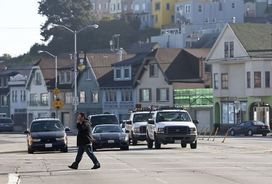
Disc surgery is often successful at reducing pain resulting from having herniated discs. However, studies comparing the effectiveness of surgical v. non-surgical treatment of disc conditions demonstrate mixed results, and surgery should not always be the first option, even though it might be encouraged by a particular doctors, as sometimes the motivations of doctors to perform a surgery are less than noble and are in large part driven by billing your insurance company. This means, that seeking at least one second opinion from another competent and reputable doctor as to the need for surgery is a very good idea. If you plan on having a surgery in a foreseeable future, it's very important that either you or your attorney obtain a letter from a potential surgeon about the cost and the nature of the surgery and the treatment will need during recovery in order to maximize the settlement of your injury claim or a court award, if you case goes to trial. Every person should know that if he is hit by a car when they cross the street not in the crosswalk, they will likely not be able to recover compensation for their injuries. The pedestrian law is clear - a pedestrian does not have the right of way when he or she crosses the road outside the crosswalk. This is especially true if the driver has no way of seeing that a pedestrian is intending to cross the street up until right before hitting the person, as it would be in cases where the pedestrians pops out from between the parked cars. Over the past few years I had to regretfully inform several people who had very serious injuries when they tried to run across the street but not in a crosswalk, that I simply couldn't help them beyond referring them to the good doctors. On the other hand, the law is very protective of those pedestrians who proceed across the street through the crosswalk, giving absolute right of way to pedestrians. In cases where a pedestrian is hit while in a crosswalk, the driver will almost always be found liable for those injuries, regardless of why the driver couldn't see the pedestrian (i.e. time of the day, weather condition, etc.). |
Contact us
Contact us for a free, no-obligation consultation to discuss your injury claim at (415) 295-4730 Categories
All
|


RSS Feed